# Medical Emergencies
# Anaphylaxis (Allergic Reaction)
#### **What is it?**
##### A life-threatening allergic reaction (anaphylaxis) can cause shock, a sudden drop in blood pressure and trouble breathing. In people who have an allergy, anaphylaxis can occur minutes after exposure to a specific allergy-causing substance (allergen). In some cases, there may be a delayed reaction, or anaphylaxis may occur without an obvious trigger.
#### **Symptoms:**
- ##### Skin reactions, including hives, itching, and skin that becomes flushed or changes color
- ##### Swelling of the face, eyes, lips or throat
- ##### Narrowing of the airways, leading to wheezing and trouble breathing or swallowing
- ##### A weak and rapid pulse
- ##### Nausea, vomiting or diarrhea
- ##### Dizziness, fainting or unconsciousness
#### **Possible Triggers:**
- ##### Medications
- ##### Latex
- ##### Foods such as peanuts, tree nuts, fish and shellfish
- ##### Insect stings from bees, yellow jackets, wasps, hornets and fire ants
#### **Plan of Action:**
- ##### Immediately call 911 or your local medical emergency number.
- ##### Ask if the person is carrying an epinephrine autoinjector (EpiPen, Auvi-Q, others) to treat an allergic attack.
- ##### If the person needs to use an autoinjector, ask whether you should help inject the medication. This is usually done by pressing the autoinjector against the person's thigh.
- ##### Have the person lie face up and be still.
- ##### Loosen tight clothing and cover the person with a blanket. Don't give the person anything to drink.
- ##### If there's vomiting or bleeding from the mouth, turn the person to the side to prevent choking.
- ##### If there are no signs of breathing, coughing or movement, begin CPR. Do uninterrupted chest presses — about 100 every minute — until paramedics arrive.
- ##### Get emergency treatment even if symptoms start to improve. After anaphylaxis, it's possible for symptoms to start again (recur). Monitoring in a hospital for several hours is usually necessary.
##### If you're with someone having symptoms of anaphylaxis, don't wait to see whether symptoms get better. Seek emergency treatment right away. In severe cases, untreated anaphylaxis can lead to death within half an hour.
##### An antihistamine pill, such as diphenhydramine (Benadryl), isn't enough to treat anaphylaxis. These medications can help relieve allergy symptoms, but they work too slowly in a severe reaction.
# Breathing Problems/Asthma
#### **What is it?**
##### Mild or severe blockage of the air passages for many different reasons.
##### One possible cause for breathing problems is asthma, a disease of the air passages. One possible cause of breathing problems is asthma, a disease of the air passages. A person who is having an asthma attack will have trouble breathing.
##### Someone experiencing a heart attack, stroke, or certain injuries may also having breathing problems. Your actions in the first few minutes after you see the signs of any of these conditions could help save a life.
#### **Signs/Symptoms:**
- ##### Breathing very fast or very slowly
- ##### Having trouble with every breath
- ##### Noisy breathing - you hear a sound or whistle as the air enters or leaves the lungs
- ##### Can only make sounds or speak only a few words at a time between breaths
#### **Plan of Action:**
##### Someone with a medical condition involving breathing problems, such as asthma, often carry an inhaler. The inhaler helps them breathe more easily within minutes of using it.
##### At times, a person can have such a hard time breathing that they need help getting and/or using their inhaler.
#### **Using an Inhaler:**
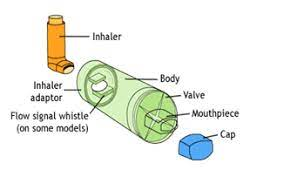
##### Inhalers have a medicine canister (often albuterol), a mouthpiece, and sometimes a spacer. The spacer can be attached to make it easier and more effective for the person to inhale all the medicine.
[](https://safety.scswiderski.net/uploads/images/gallery/2023-04/image.png)
- ##### Remove the cap and shake well
- ##### If they have a spacer, attach it to the mouth piece of the inhaler
- ##### Have them exhale all the way
- ##### Place the mouthpiece in their mouth and have them seal their lips around it
- ##### Press down on the top of the inhaler one time
- ##### Have them inhale as slowly and deeply as they can for about 5 seconds and hold for about 10 seconds to allow the medicine to reach the airways of the lungs
- ##### Repeat for each puff indicated on the inhaler (generally 2 puffs total)
##### **Call 911 if the person has no medicine, does not get better or worsens, has trouble speaking, or becomes unresponsive.**
# Choking
#### **What is it?**
##### When an object lodges in the throat or windpipe blocking the flow of air.
#### **Signs/Symptoms:**
- ##### One or both hands clutched to the throat
- ##### A look of panic, shock or confusion
- ##### Inability to talk
- ##### Strained or noisy breathing
- ##### Squeaky sounds when trying to breathe
- ##### Cough, which may either be weak or forceful
- ##### Skin, lips and nails that change color turning blue or gray
- ##### Loss of consciousness
#### **Plan of Action:**
- ##### If a choking person can cough forcefully, let the person keep coughing - coughing might naturally remove the stuck object.
- ##### If a person can't cough, talk, cry or laugh forcefully, give first aid to the person.
##### **The American Red Cross recommends the following steps:**
- ##### **Give five back blows.** Stand to the side and just behind a choking adult. For a child, kneel down behind. Place your arm across the person's chest to support the person's body. Bend the person over at the waist to face the ground. Strike five separate times between the person's shoulder blades with the heel of your hand.
- ##### **Give five abdominal thrusts.** If back blows don't remove the stuck object, give five abdominal thrusts, also known as the Heimlich maneuver.
- ##### **Alternate between five blows and five thrusts until the blockage is dislodged.**
##### Some sources only teach the abdominal thrust. It's OK not to use back blows if you haven't learned the back-blow technique. Both approaches are acceptable for adults and children older than age 1.
##### **To give abdominal thrusts to someone else:**
- ##### **Stand behind the person.** For a child, kneel down behind. Place one foot slightly in front of the other for balance. Wrap your arms around the waist. Tip the person forward slightly.
- ##### **Make a fist with one hand.** Put it just above the person's navel.
- ##### **Grasp the fist with the other hand.** Press into the stomach, also called the abdomen, with a quick, upward thrust — as if trying to lift the person up. For a child, use gentle yet firm pressure to avoid damaging the internal organs.
- ##### **Give five abdominal thrusts.** Check if the blockage has been removed. Repeat as needed.
##### If you're the only rescuer, give back blows and abdominal thrusts first. Then call 911 or your local emergency number for help. If another person is there, have that person call for help while you give first aid.
##### If the person becomes unconscious, start standard cardiopulmonary resuscitation (CPR) with chest compressions and rescue breaths.
##### **If the person is pregnant or if you can't get your arms around the stomach, give chest thrusts:**
- ##### **Put your hands at the base of the breastbone,** just above the joining of the lowest ribs.
- ##### **Press hard into the chest with a quick thrust.** This is the same action as the Heimlich maneuver.
- ##### **Repeat until the blockage is removed from the airway.**
##### **To clear the airway of an unconscious person:**
- ##### **Lower the person onto the floor,** with the back on the floor and arms to the sides.
- ##### **Clear the airway.** If you can see the object, reach a finger into the mouth to sweep out the object. Never finger sweep if you can't see the object. You risk pushing the blockage deeper into the airway. This is very risky with young children.
- ##### **Begin CPR if the person still doesn't respond.** If the airway is still blocked, use chest compressions such as those that are used in CPR to remove the stuck object. Only use two rescue breaths per cycle. Recheck the mouth regularly for the object.
##### **To clear the airway of a choking infant younger than age 1:**
- ##### **Sit and hold the infant facedown on your forearm.** Rest your forearm on your thigh. Hold the infant's chin and jaw to support the head. Place the head lower than the trunk.
- ##### **Thump the infant gently but firmly five times on the middle of the back.** Use the heel of your hand. Point your fingers up so that you don't hit the back of the infant's head. Gravity and the back thumps should release the blockage.
- ##### **Turn the infant faceup on your forearm if breathing hasn't started.** Rest your arm on your thigh. Place the infant's head lower than the trunk.
- ##### **Give five gentle but firm chest compressions with your fingers.** Place two fingers just below the nipple line. Press down about 1 1/2 inches. Let the chest rise between each compression.
- ##### **Repeat the back thumps and chest compressions if breathing doesn't start.** Call for emergency medical help.
- ##### **Begin infant CPR if the airway is clear but the infant doesn't start breathing.**
##### **If you're alone and choking:**
##### Call 911 or your local emergency number right away. Then, give yourself abdominal thrusts, also called the Heimlich maneuver, to remove the stuck object.
- ##### **Place a fist slightly above your navel.**
- ##### **Grasp your fist with the other hand.**
- ##### **Bend over a hard surface.** A countertop or chair will do.
- ##### **Shove your fist inward and upward.**
##### To prepare yourself for these situations, learn the Heimlich maneuver and CPR in a certified first-aid training course.
# CPR
# Cardiopulmonary Resuscitation (CPR)
#### **What is it?**
##### A lifesaving technique that's useful in many emergencies, such as a heart attack or near drowning, in which someone's breathing or heartbeat has stopped. The American Heart Association recommends starting CPR with hard and fast chest compressions. This hands-only CPR recommendation applies to both untrained bystanders and first responders.
#### **Plan of Action:**
##### If you're afraid to do CPR or unsure how to perform CPR correctly, know that it's always better to try than to do nothing at all. The difference between doing something and doing nothing could be someone's life.
##### Here's advice from the American Heart Association:
- ##### **Untrained.** If you're not trained in CPR or worried about giving rescue breaths, then provide hands-only CPR. That means uninterrupted chest compressions of 100 to 120 a minute until paramedics arrive (described in more detail below). You don't need to try rescue breathing.
- ##### **Trained and ready to go.** If you're well-trained and confident in your ability, check to see if there is a pulse and breathing. If there is no pulse or breathing within 10 seconds, begin chest compressions. Start CPR with 30 chest compressions before giving two rescue breaths.
- ##### **Trained but rusty.** If you've previously received CPR training but you're not confident in your abilities, then just do chest compressions at a rate of 100 to 120 a minute (details described below).
##### The above advice applies to situations in which adults, children and infants need CPR, but not newborns (infants up to 4 weeks old).
##### CPR can keep oxygen-rich blood flowing to the brain and other organs until emergency medical treatment can restore a typical heart rhythm. When the heart stops, the body no longer gets oxygen-rich blood. The lack of oxygen-rich blood can cause brain damage in only a few minutes.
##### If you are untrained and have immediate access to a phone, call 911 or your local emergency number before beginning CPR. The dispatcher can instruct you in the proper procedures until help arrives. To learn CPR properly, take an accredited first-aid training course, including CPR and how to use an automated external defibrillator (AED).
#### **Before you begin, check:**
- ##### Is the environment safe for the person?
- ##### Is the person conscious or unconscious?
- ##### If the person appears unconscious, tap or shake his or her shoulder and ask loudly, "Are you OK?"
- ##### If the person doesn't respond and you're with another person who can help, have one person call 911 or the local emergency number and get the AED, if one is available. Have the other person begin CPR.
- ##### If you are alone and have immediate access to a telephone, call 911 or your local emergency number before beginning CPR. Get the AED if one is available.
- ##### As soon as an AED is available, deliver one shock if instructed by the device, then begin CPR.
- ##### As soon as an AED is available, deliver one shock if instructed by the device, then begin CPR.
##### The American Heart Association uses the letters C-A-B to help people remember the order to perform the steps of CPR.
- ##### **C:** compressions
- ##### **A:** airway
- ##### **B:** breathing
##### **Chest compressions**
##### **Open the airway**
##### **Rescue Breathing**
#### **Compressions: Restore blood flow**
##### Compressions means you'll use your hands to push down hard and fast in a specific way on the person's chest. Compressions are the most important step in CPR. Follow these steps for performing CPR compressions:
1. Put the person on his or her back on a firm surface.
2. Kneel next to the person's neck and shoulders.
3. Place the lower palm (heel) of your hand over the center of the person's chest, between the nipples.
4. Place your other hand on top of the first hand. Keep your elbows straight and position your shoulders directly above your hands.
5. Push straight down on (compress) the chest at least 2 inches (5 centimeters) but no more than 2.4 inches (6 centimeters). Use your entire body weight (not just your arms) when doing compressions.
6. Push hard at a rate of 100 to 120 compressions a minute. The American Heart Association suggests performing compressions to the beat of the song "Stayin' Alive." Allow the chest to spring back (recoil) after each push.
7. If you haven't been trained in CPR, continue chest compressions until there are signs of movement or until emergency medical personnel take over. If you have been trained in CPR, go on to opening the airway and rescue breathing.
#### **Airway: Open the airway**
##### If you're trained in CPR and you've performed 30 chest compressions, open the person's airway using the head-tilt, chin-lift maneuver. Put your palm on the person's forehead and gently tilt the head back. Then with the other hand, gently lift the chin forward to open the airway.
#### **Breathing: Breathe for the person**
##### Rescue breathing can be mouth-to-mouth breathing or mouth-to-nose breathing if the mouth is seriously injured or can't be opened. Current recommendations suggest performing rescue breathing using a bag-mask device with a high-efficiency particulate air (HEPA) filter.
1. After opening the airway (using the head-tilt, chin-lift maneuver), pinch the nostrils shut for mouth-to-mouth breathing and cover the person's mouth with yours, making a seal.
2. Prepare to give two rescue breaths. Give the first rescue breath — lasting one second — and watch to see if the chest rises.
3. If the chest rises, give a second breath.
4. If the chest doesn't rise, repeat the head-tilt, chin-lift maneuver and then give a second breath. Thirty chest compressions followed by two rescue breaths is considered one cycle. Be careful not to provide too many breaths or to breathe with too much force.
5. Resume chest compressions to restore blood flow.
6. As soon as an automated external defibrillator (AED) is available, apply it and follow the prompts. Give one shock, then resume chest compressions for two more minutes before giving a second shock. If you're not trained to use an AED, a 911 operator or another emergency medical operator may be able to give you instructions. If an AED isn't available, go to step 5 below.
7. Continue CPR until there are signs of movement or emergency medical personnel take over.
# CPR on a Baby 4 Weeks or Older
#### **What is it?**
##### A lifesaving technique that's useful in many emergencies, such as a heart attack or near drowning, in which someone's breathing or heartbeat has stopped. The American Heart Association recommends starting CPR with hard and fast chest compressions. This hands-only CPR recommendation applies to both untrained bystanders and first responders.
#### **Plan of Action:**
##### Cardiac arrest in babies is usually due to a lack of oxygen, such as from choking. If you know that the baby has an airway blockage, perform first aid for choking. If you don't know why the baby isn't breathing, perform CPR.
##### First, evaluate the situation. Touch the baby and watch for a response, such as movement. Don't shake the baby.
##### If there's no response, call 911 or your local emergency number, then immediately start CPR.
##### Follow the compressions, airway and breathing (C-A-B) procedure (below) for a baby under age 1 (except newborns, which include babies up to 4 weeks old):
##### If you saw the baby collapse, get the AED, if one is available, before beginning CPR. If another person is available, have that person call for help immediately and get the AED while you stay with the baby and perform CPR.
#### **Compressions: Restore blood flow**
1. Place the baby on his or her back on a firm, flat surface, such as a table or floor.
2. Imagine a horizontal line drawn between the baby's nipples. Place two fingers of one hand just below this line, in the center of the chest.
3. Gently compress the chest about 1.5 inches (about 4 centimeters).
4. Count aloud as you push in a fairly rapid rhythm. You should push at a rate of 100 to 120 compressions a minute, just as you would when giving an adult CPR.
#### **Airway: Open the airway**
##### After 30 compressions, gently tip the head back by lifting the chin with one hand and pushing down on the forehead with the other hand.
#### **Breathing: Breathe for the baby**
1. Cover the baby's mouth and nose with your mouth.
2. Prepare to give two rescue breaths. Use the strength of your cheeks to deliver gentle puffs of air (instead of deep breaths from your lungs) to slowly breathe into the baby's mouth one time, taking one second for the breath. Watch to see if the baby's chest rises. If it does, give a second rescue breath. If the chest does not rise, repeat the head-tilt, chin-lift maneuver and then give the second breath.
3. If the baby's chest still doesn't rise, continue chest compressions.
4. Give two breaths after every 30 chest compressions. If two people are performing CPR, give one to two breaths after every 15 chest compressions.
5. Continue CPR until you see signs of life or until medical personnel arrive.
# CPR on a Child
#### **What is it?**
##### A lifesaving technique that's useful in many emergencies, such as a heart attack or near drowning, in which someone's breathing or heartbeat has stopped. The American Heart Association recommends starting CPR with hard and fast chest compressions. This hands-only CPR recommendation applies to both untrained bystanders and first responders.
##### The procedure for giving CPR to a child age 1 through puberty is essentially the same as that for an adult — follow the C-A-B steps. The American Heart Association says you should not delay CPR and offers this advice on how to perform CPR on a child:
#### **Before you begin, check:**
- ##### Is the environment safe for the person?
- ##### Is the person conscious or unconscious?
- ##### If the person appears unconscious, tap or shake his or her shoulder and ask loudly, "Are you OK?"
- ##### If the person doesn't respond and you're with another person who can help, have one person call 911 or the local emergency number and get the AED, if one is available. Have the other person begin CPR.
- ##### If you are alone and have immediate access to a telephone, call 911 or your local emergency number before beginning CPR. Get the AED if one is available.
- ##### As soon as an AED is available, deliver one shock if instructed by the device, then begin CPR.
- ##### As soon as an AED is available, deliver one shock if instructed by the device, then begin CPR.
##### The American Heart Association uses the letters C-A-B to help people remember the order to perform the steps of CPR.
- ##### **C:** compressions
- ##### **A:** airway
- ##### **B:** breathing
##### **Chest compressions**
##### **Open the airway**
##### **Rescue Breathing**
#### **Compressions: Restore blood flow**
##### If you are alone and didn't see the child collapse, start chest compressions for about two minutes. Then quickly call 911 or your local emergency number and get the AED if one is available.
##### If you're alone and you did see the child collapse, call 911 or your local emergency number first. Then get the AED, if available, and start CPR. If another person is with you, have that person call for help and get the AED while you start CPR.
1. Place the child on his or her back on a firm surface.
2. Kneel next to the child's neck and shoulders.
3. Place two hands (or only one hand if the child is very small) on the lower half of the child's breastbone (sternum).
4. Using the heel of one or both hands, press straight down on (compress) the chest about 2 inches (approximately 5 centimeters) but not greater than 2.4 inches (approximately 6 centimeters). Push hard and fast — 100 to 120 compressions a minute.
5. If you haven't been trained in CPR, continue chest compressions until the child moves or until emergency medical personnel take over. If you have been trained in CPR, open the airway and start rescue breathing.
#### **Airway: Open the airway**
##### If you're trained in CPR and you've performed 30 chest compressions, open the child's airway using the head-tilt, chin-lift maneuver.
- ##### Place your palm on the child's forehead and gently tilt his or her head back.
- ##### With the other hand, gently lift the chin forward to open the airway.
#### **Breathing: Breathe for the child**
##### Follow these steps for mouth-to-mouth breathing for a child.
1. After using the head-tilt, chin-lift maneuver to open the airway, pinch the child's nostrils shut. Cover the child's mouth with yours, making a seal.
2. Breathe into the child's mouth for one second and watch to see if the chest rises. If it rises, give a second breath. If the chest doesn't rise, repeat the head-tilt, chin-lift maneuver first, and then give the second breath. Be careful not to provide too many breaths or to breathe with too much force.
3. After the two breaths, immediately begin the next cycle of compressions and breaths. Note: If there are two people available to do CPR on the child, change rescuers every two minutes — or sooner if the rescuer is fatigued — and give one to two breaths every 15 compressions.
4. As soon as an AED is available, apply it and follow the prompts. As soon as an AED is available, apply it and follow the prompts. Use pediatric pads for children older than 4 weeks old and up to age 8. If pediatric pads aren't available, use adult pads. Give one shock, then restart CPR — starting with chest compressions — for two more minutes before giving a second shock. If you're not trained to use an AED, a 911 operator or another emergency medical operator may be able to give you directions.
##### Continue until the child moves or help arrives.
# Fainting
#### **What is it?**
##### When your brain temporarily doesn't receive enough blood supply, causing you to lose consciousness. This loss of consciousness is usually brief.
##### Fainting might have no medical significance. Or the cause can be a serious disorder, often involving the heart. Therefore, treat loss of consciousness as a medical emergency until the signs and symptoms are relieved, and the cause is known. Talk to your doctor if you faint more than once.
#### **Symptoms:**
- ##### Dizziness
- ##### Lightheadedness
- ##### Sweating
- ##### Changes to your breathing, such as faster and deeply
- ##### Altered vision, such as blurring and seeing spots or lights
- ##### Nausea
#### **Plan of Action:**
##### **If you feel faint:**
- ##### **Lie down or sit down.** To reduce the chance of fainting again, don't get up too quickly.
- ##### **Place your head between your knees** if you sit down.
##### **If someone else faints:**
- ##### **Position the person on his or her back.** If there are no injuries and the person is breathing, raise the person's legs above heart level — about 12 inches (30 centimeters) — if possible. Loosen belts, collars or other constrictive clothing.
##### To reduce the chance of fainting again, don't get the person up too quickly. If the person doesn't regain consciousness within one minute, call 911 or your local emergency number.
- ##### **Check for breathing.** If the person isn't breathing, begin CPR. Call 911 or your local emergency number. Continue CPR until help arrives or the person begins to breathe.
##### If the person was injured in a fall associated with a faint, treat bumps, bruises or cuts appropriately. Control bleeding with direct pressure.
# Heart Related Emergencies
# Angina
#### **What is it?**
##### Chest pain or discomfort caused by reduced blood flow to your heart muscle.
#### **Symptoms:**
##### It can be hard to tell the difference from angina and other types of chest pain, such as indigestion.
##### Angina can be stable or unstable.
- ##### Stable angina is chest pain that usually occurs with activity and is relatively predictable. The chest pain tends to follow a pattern. In other words, there's been no change in how often you get the chest pain and how long it lasts.
- ##### Unstable angina is chest pain that is sudden or new or changes from the typical pattern. It may be a sign of a future heart attack.
##### If your angina gets worse or changes, seek emergency medical help immediately.
# Aortic Dissection
#### **What is it?**
##### A tear in the inner layer of the aorta, the large blood vessel branching off the heart. Blood rushes through this tear into the middle layer of the aorta, causing the inner and middle layers to separate (dissect).
#### **Symptoms:**
- ##### Sudden severe chest or upper back pain, often described as a tearing, ripping or shearing sensation, that radiates to the neck or down the back
- ##### Loss of consciousness (fainting)
- ##### Shortness of breath
- ##### Sudden difficulty speaking, loss of vision, weakness or paralysis of one side of your body, such as having a stroke
- ##### Heavy sweating
- ##### Weak pulse in one arm compared with the other
##### If you are having any of these signs or symptoms, they could be caused by an aortic dissection or another serious condition. Seek emergency medical help immediately.
# Cardiac Arrest vs. Heart Attack
### **Heart attacks and cardiac arrest are not the same thing.**
##### **Heart Attack:**
- ##### Occurs when blood flow to part of the heart muscle is blocked by a clot.
- ##### The longer the person with a heart attack goes without treatment, the greater the damage to the heart muscle.
- ##### Occasionally, the damaged heart muscle triggers an abnormal rhythm that can lead to cardiac arrest.
##### **Cardiac Arrest:**
- ##### Occurs due to an abnormal heart rhythm.
- ##### The abnormal rhythm causes the heart to quiver so that it can no longer pump blood to the brain, lungs, and other organs.
- ##### Within seconds, the person becomes unresponsive and is not breathing or is only gasping.
- ##### Death occurs within minutes if the victim does not receive lifesaving treatment.
# Chest Wall Pain
#### **What is it?**
##### A type of muscle pain in the chest.
#### **Types of Chest Wall Pain:**
- ##### **Bruised chest muscles**
- ##### from excessive coughing, straining or minor injury can cause harmless chest pain.
- ##### **Costochondritis**
- ##### causes pain and tenderness in and around the cartilage that connects your ribs to your breastbone (sternum).
##### If you have costochondritis, pressing on a few points along the edge of your breastbone often triggers considerable tenderness. If gently touching the area with your fingers causes chest pain, it's unlikely that a serious condition, such as a heart attack, is the cause of your chest pain.
# Heart Attack
#### **What is it?**
##### A blockage of blood flow to the heart muscle due to a clot.
#### **Symptoms:**
##### A heart attack generally causes chest pain for more than 15 minutes. The pain may be mild or severe. Some heart attacks strike suddenly, but many people have warning signs hours or days in advance.
##### **Someone having a heart attack may have any or all of the following:**
- ##### Chest pain, pressure or tightness, fullness, or a squeezing or aching sensation in the center of the chest
- ##### Pain or discomfort that spreads to the shoulder, arm, back, neck, jaw, teeth, or stomach
- ##### Nausea, indigestion, heartburn or abdominal pain
- ##### Shortness of breath
- ##### Lightheadedness, dizziness, fainting
- ##### Cold sweat
#### **Symptoms in Women:**
##### **Women often experience less obvious warning signs**
- ##### An uncomfortable feeling in the upper back, jaw, neck, or shoulder
- ##### Shortness of breath
- ##### Nausea or vomiting
- ##### Pain or pressure in the lower chest or upper abdomen
- ##### Fainting
- ##### Indigestion
- ##### Extreme fatigue
#### **Plan of Action:**
- ##### **Call 911 or emergency medical assistance.** Don't ignore the symptoms of a heart attack. If you can't get an ambulance or emergency vehicle to come to you, have a neighbor or a friend drive you to the nearest hospital. Drive yourself only if you have no other option. Because your condition can worsen, driving yourself puts you and others at risk.
- ##### **Chew aspirin.** Aspirin is a blood thinner. It prevents clotting and keeps blood flowing through a narrowed artery that's caused a heart attack. Don't take aspirin if you have chest pain due to an injury. Also, don't take aspirin if you are allergic to aspirin, have bleeding problems or take another blood-thinning medication, or if your health care provider previously told you not to do so.
- ##### **Take nitroglycerin, if prescribed.** If you think you're having a heart attack and your health care provider has previously prescribed nitroglycerin for you, take it as directed. Don't take anyone else's nitroglycerin.
- ##### **Begin CPR on the person having a heart attack.** The American Heart Association recommends starting hands-only CPR. Push hard and fast on the person's chest for 100 to 120 compressions a minute.
- ##### **If an automated external defibrillator (AED)** is immediately available and the person is unconscious, follow the device instructions for using it
# Pericarditis
#### **What is it?**
##### Swelling and irritation of the thin, saclike tissue surrounding your heart (pericardium).
#### **Symptoms:**
- ##### Sharp chest pain that gets worse when you cough, lie down, or take a deep breath
##### Pericarditis is usually mild and goes away without treatment. If it's severe, you may need medication or, rarely, surgery.
##### It may be difficult to tell the difference between sudden (acute) pericarditis and pain due to a heart attack. If you have sudden, unexplained chest pain, seek emergency medical help.
# Pneumonia with Pleurisy
#### **What is it?**
##### Inflammation of the membranes that surround the lung (pleura).
#### **Symptoms:**
- ##### Chills
- ##### Fever
- ##### A cough that may produce bloody or foul-smelling sputum
- ##### Chest pain when taking a breath or coughing
##### Unlike a true heart attack, pleurisy pain is usually relieved temporarily by holding your breath or putting pressure on the painful area of your chest.
##### If you've recently been diagnosed with pneumonia and then start having symptoms of pleurisy, contact your health care provider or seek immediate medical attention to determine the cause of your chest pain. Pleurisy alone isn't a medical emergency, but you shouldn't try to make the diagnosis yourself.
# Pulmonary Embolism
#### **What is it?**
##### A blood clot in the lung.
##### It occurs when a clot, usually in the leg or pelvis, breaks free and gets stuck in a lung artery (pulmonary artery). The clot interrupts blood flow, making it more difficult for your lungs to provide oxygen to the rest of your body.
#### **Symptoms:**
- ##### Sudden, sharp chest pain often with shortness of breath
- ##### Sudden, unexplained shortness of breath, even without pain
- ##### Cough that may produce blood-streaked spit
- ##### Rapid heartbeat with shortness of breath
- ##### Fainting
- ##### Severe anxiety
- ##### Unexplained sweating
- ##### Swelling of one leg only, caused by a blood clot in the leg
##### Pulmonary embolism can be life-threatening. If you have symptoms of a pulmonary embolism, seek emergency medical help immediately.
# Stroke
#### **What is it?**
##### Occurs when there's bleeding into the brain or when blood flow to the brain is blocked.
##### When brain cells are deprived of essential nutrients, they start dying within minutes.
##### **Seek immediate medical help.** A stroke is a true emergency. The sooner treatment is given, the more likely it is that damage can be minimized. Every moment counts.
#### **Symptoms:**
##### **In the event of a possible stroke, use F.A.S.T. to help remember warning signs:**
- ##### **Face.** Does the face droop on one side when the person tries to smile?
- ##### **Arms.** Is one arm lower when the person tries to raise both arms?
- ##### **Speech.** Can the person repeat a simple sentence? Is speech slurred or hard to understand?
- ##### **Time.** During a stroke every minute counts. If you see any of these signs, call 911 or your local emergency number right away.
##### **Other signs and symptoms of a stroke, which come on suddenly, include:**
- ##### Weakness or numbness on one side of the body, including the face, arm or leg.
- ##### Dimness, blurring or loss of vision, particularly in one eye. Or sudden double vision.
- ##### Sudden, severe headache with no clear cause.
- ##### Unexplained dizziness, unsteadiness or a sudden fall. Especially if dizziness is accompanied by any of the other signs or symptoms.
##### **Having a stroke puts you at higher risk of having another. Risk factors also include having high blood pressure, smoking, having diabetes and having heart disease. Your risk of stroke increases as you age.**
# Diabetes and Low Blood Sugar
#### **What is it?**
##### A disease that affects the levels of sugar in the blood.
##### Too much sugar or too little sugar causes problems. Some people with diabetes take medication, such as insulin, to maintain their sugar levels. Low blood sugar can occur if someone with diabetes has not eaten or is vomiting, has not eaten enough food r the level of activity, or has injected to much insulin
#### **Signs/Symptoms:**
##### If the person's blood sugar gets too low, their behavior can change. Signs of low blood sugar come on quickly:
- ##### Irritable or confused
- ##### Hungry or weak
- ##### Sleepy
- ##### Sweaty
- ##### In some cases, they might have a seizure
#### **Plan of Action:**
##### **If the person can't sit up or swallow:**
- ##### Call 911
- ##### Do not try to give them anything to eat or drink
##### **If the person can sit up and swallow:**
- ##### Ask the person to eat or drink something with sugar that can rapidly restore blood glucose levels.
- ##### Ex: glucose tablets, orange juice, soft chewy candy, jelly beans, fruit leather, etc.
- ##### Have the person sit quietly or lie down
- ##### If the person does not improve in 10 minutes, call 911
# Seizures
#### **What is it?**
##### Abnormal electrical activity in the brain.
#### **What causes it?**
- ##### Epilepsy
- ##### Head injuries
- ##### Low blood sugar
- ##### Heat-related injuries
- ##### Poisoning
- ##### Cardiac Arrest
#### **Signs/Symptoms:**
##### **Seizure symptoms may differ from person to person.**
- ##### Loss of muscle control
- ##### Fall to the ground
- ##### Stop responding
- ##### Jerking movements of the arms, legs, or other parts of the body
- ##### Glassy-eyed stare
#### **Plan of Action:**
##### **During:**
- ##### Move furniture or other objects out of the way to prevent injury
- ##### Place something soft under the person's head
- ##### Never hold the person down or put anything in their mouth
##### **After:**
- ##### Check if the person is responsive and breathing
- ##### Stay with them until medical help arrives
- ##### If the person is having trouble breathing because of vomiting or fluids in their mouth, roll them onto their side
- ##### If they are unresponsive and not breathing normally or are only gasping, start CPR and call 911
- ##### If they have injured themselves, give first aid